

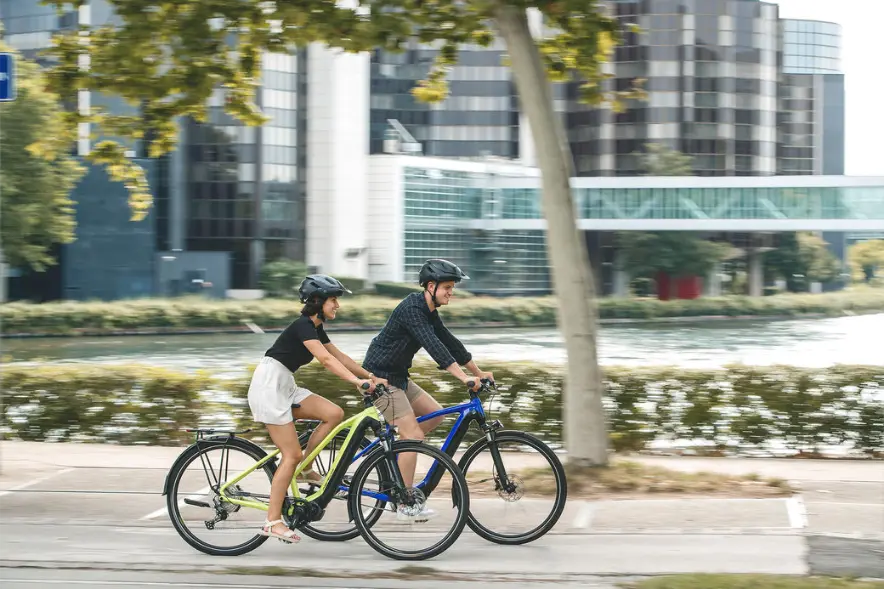
 Growing environmental and health awareness — together with expanding urban areas — has led to a
rising use of city or “urban” bikes for daily commuting. This trend is already reshaping the way we
experience cities, making urban bicycles an increasingly popular and sustainable choice for the future.
Growing environmental and health awareness — together with expanding urban areas — has led to a
rising use of city or “urban” bikes for daily commuting. This trend is already reshaping the way we
experience cities, making urban bicycles an increasingly popular and sustainable choice for the future.
They are considered safe, comfortable, versatile, lightweight, durable, and environmentally friendly. These features make them the perfect option for getting around the city while contributing to a greener, healthier future — without depending on a car.
Choosing to ride a bike means turning your home-to-work commute into an opportunity to exercise and stay fit. You can move more freely from the suburbs to the city center, leave traffic behind, and reach your destination without worrying about restricted traffic zones or parking.
Among the most common urban bikes are classic city bikes, also known as commuters — ideal for getting around town or covering short urban routes with ease. They allow for an upright riding position that improves visibility in traffic and increases safety. They also combine a stylish design with great versatility and practicality, often equipped with fenders, racks, baskets, and lights.
Hybrid bikes are versatile and fast — true all-rounders. They’re sporty and agile, great for staying in shape, perfect for city rides or simply for getting out and feeling good.
Folding bikes are an excellent choice for those with limited space at home, in the garage, or at work. With small wheels and a folding frame, they can be easily stored even in tight spaces. They’re also ideal for those who prefer not to leave their bikes outside — once folded, they can even fit under an office desk.
Lightweight and easy to carry, folding bikes are perfect for people who travel frequently by bus, metro, or train. They fit comfortably in a car and can be taken on public transport at no extra cost, since their compact size is similar to a suitcase — making urban and suburban commuting easier and more convenient.
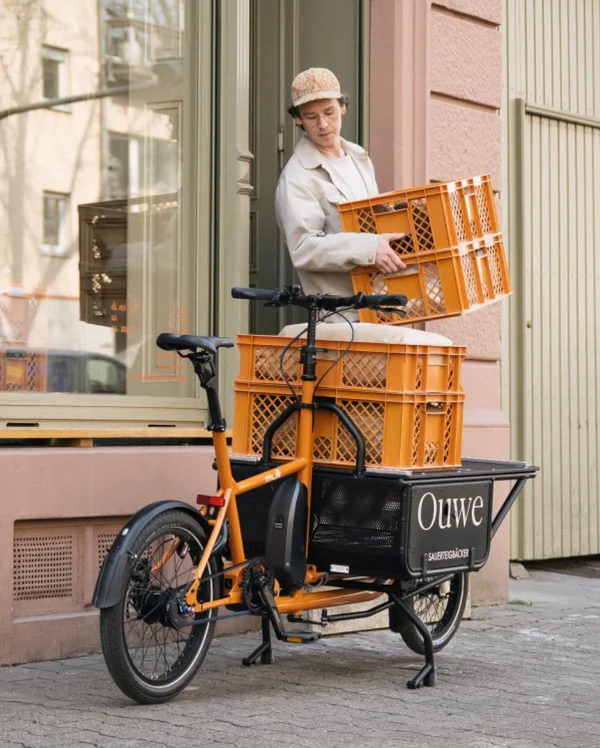 Cargo bikes are bicycles with a large loading surface designed to safely and conveniently transport children, adults, animals, and even packages and loads, making them a truly eco-friendly alternative to cars.
Cargo vehicles are agile and practical: they allow you to move quickly around cities, where traffic often becomes a major obstacle. With a cargo vehicle, you can make deliveries, go to work, take your kids to school, stop for groceries, take your dog to the park, or transport a wide variety of items without worrying about parking, arriving right at the door of your favorite store or cafe.
Accessories make them customizable through rain or sun covers, child seats, additional roof racks and safety systems, making them suitable for different situations and weather conditions.
The cargo section of a cargo bike can consist of a cargo bed or a basket, depending on the bike's design. Cargo bikes are classified as Long John or Long Tail, depending on whether the cargo section is positioned in front of the handlebars or behind, on the rear wheel of the bike.
The Long John is a cargo bike characterized by its particularly long and spacious front loading platform. The riding position is high, allowing for easy movement of the handlebars and maneuvering of the front load. These bikes are ideal for those who want to keep a close eye on cargo or children, and need a fast and maneuverable bike in traffic, yet capable of carrying both passengers and cargo.
Long Tails feature a particularly long and sturdy rear rack, capable of carrying heavy loads, including children. They're particularly suitable for those who prefer to carry cargo on the back.
Compact cargo bikes, on the other hand, are ideal for those who want to carry moderate loads or don't want a particularly bulky bike. They're lighter and easier to maneuver than traditional cargo bikes.
If your goal is to have greater support while pedaling for carrying heavy loads or children, the e-cargo solution is the right choice. The pedal-assisted cargo bike is certainly less tiring to pedal, and is therefore also designed for a wider audience and geographical areas, such as hilly or mountainous areas.
The cargo bike thus replaces the use of the car with an additional benefit, an economic one, since maintenance costs for an electric bicycle are significantly lower than those of motor vehicles.
Cargo trailers are also ideal solutions for professional logistics purposes. Ideal for professionals and small businesses, they allow for quick and easy delivery of goods. In recent years, even the world's largest express couriers have chosen cargo trailers for their last-mile logistics processes.
The particularly spacious cargo area allows for the loading and transport of goods, even heavy and bulky ones, significantly facilitating urban logistics. Being highly customizable, they can be equipped with special accessories that facilitate the user's work, such as internal shelving, refrigeration systems for fresh products, or secure compartments for fragile materials.
These practical bikes can access pedestrian zones and restricted traffic areas, which prohibit traditional vehicles. They reduce environmental impact because they have zero emissions. They are faster in traffic than cars and are sustainable. This translates into shorter travel times and greater efficiency, for example, compared to urban deliveries.
When you consider purchasing a cargo bike, you're immediately struck by the significant price tag, especially for pedal-assist bikes. But if you compare the price of a bike with that of another private means of transportation, you'll quickly realize that a cargo bike allows you to save on many other costs, such as gas, road tax, parking, congestion charges, taxes, and possible fines. When you factor all these costs into account, the financial savings resulting from using a bike instead of a private motorized vehicle are clear.
Cargo bikes can represent a significant investment, but one very important aspect shouldn't be overlooked: they retain their value for many years, allowing for a high resale value.
Furthermore, before purchasing a cargo bike, find out about any sustainable mobility incentives available in your municipality.
 Electric Bikes and Pedal-Assist Bikes: What’s the Difference?
Bikes equipped with an electric motor and battery are often — and incorrectly — all referred to as e-bikes.
In reality, there’s an important distinction between a fully electric bike and a pedal-assist bike, also known
as a pedelec. In a pedal-assist bike, the motor activates only when you pedal, providing support and
enhancing your effort — but never replacing it. In a fully electric bike, on the other hand, the motor can
operate independently of pedaling, making it similar to a small scooter.
Electric Bikes and Pedal-Assist Bikes: What’s the Difference?
Bikes equipped with an electric motor and battery are often — and incorrectly — all referred to as e-bikes.
In reality, there’s an important distinction between a fully electric bike and a pedal-assist bike, also known
as a pedelec. In a pedal-assist bike, the motor activates only when you pedal, providing support and
enhancing your effort — but never replacing it. In a fully electric bike, on the other hand, the motor can
operate independently of pedaling, making it similar to a small scooter.
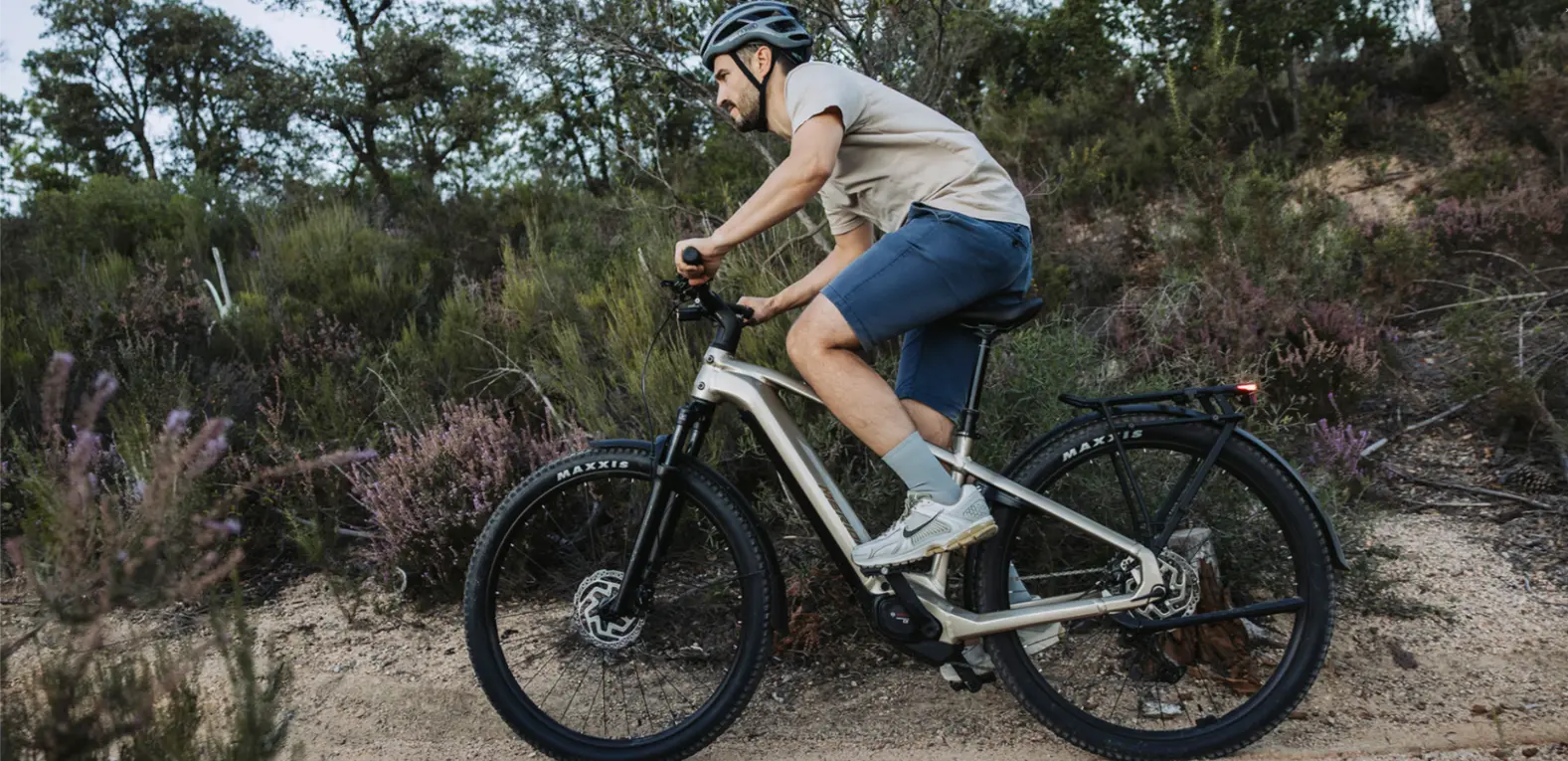
What began as a niche movement has now become a rapidly growing trend. Electric and pedal-assist bikes are increasingly popular among both young and older riders, and they’re perfect for urban commutes, recreational rides, and sportive adventures. Virtually any type of bike can be equipped with an electric motor and battery — from city bikes designed for easy daily rides to trekking bikes built for long-distance touring. Even racing bikes, mountain bikes, and gravel bikes now come with pedal-assist systems to help riders cover more distance, climb steep hills, or simply enjoy a smoother, more powerful ride. And for those who need to transport cargo, electric cargo bikes make carrying loads easier, ensuring a fluid and effortless pedaling experience.
Why Choose a Pedal-Assist Bike? Choosing a pedal-assist bike means choosing sustainable mobility and active living. It lets you move around the city without polluting, while staying fit and energetic If you use your e-bike for commuting, it transforms travel time into exercise time — without extra effort. The pedal-assist system makes cycling more relaxing and enjoyable: you can cover long distances, reach your destination feeling fresh, and even get to work or meetings without breaking a sweat. With an e-bike, you can: enter restricted traffic zones (ZTL) and explore alternative routes, climb hills that would be impossible on a traditional bike, forget about parking issues — and if it’s a folding e-bike, you can take it anywhere. Financially, an e-bike is a smart investment: no fuel, taxes, insurance, or parking fees. You can also benefit from mobility bonuses and government incentives, while enjoying a purchase price far lower than that of a car. It’s also an excellent choice for recovery after injuries, helping you avoid excessive strain on knees, muscles, and joints, and making physical activity accessible to everyone.
Leading E-Bike Systems: Bosch and Shimano Among the many e-bike motor and battery systems available, two brands stand out: Bosch and Shimano — synonymous with quality, performance, and reliability. Their integrated systems — combining motor, display, battery, and smart apps — deliver a smooth and connected riding experience. Trusted by over 100 leading e-bike brands worldwide, Bosch and Shimano units ensure long-lasting performance and dependable support, ride after ride.